

During ORGATEC 2026, Peter Ippolito of Ippolito Fleitz Group (IFG) and Elettra de Pellegrin of Slalom talk about the stand they designed for the fair together: acoustics as an experience, spaces you make your own, and a belief that architecture and design are always a matter of culture, trust and care
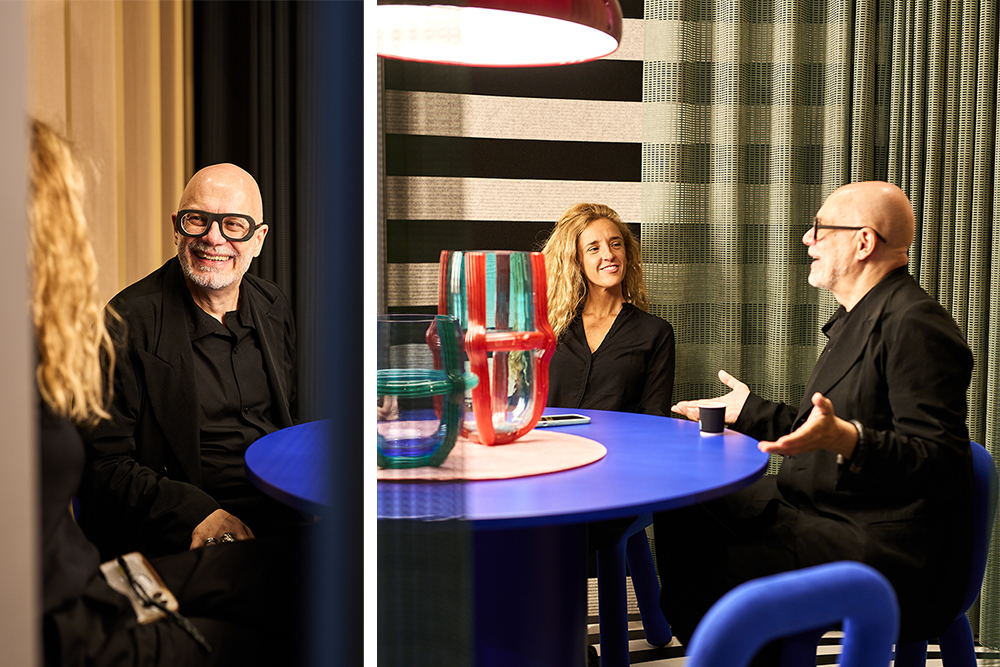
It began, as any good story should, around a table. Two years ago, Peter Ippolito, Managing Partner of IFG, and Elettra de Pellegrin, founder and CEO of Slalom, shared a dinner and found themselves talking about resonance. “We resonated with each other straight away,” Ippolito recalls.
Asked what each brought to the project that the other did not have, they describe two sides of the same idea. For Ippolito, acoustics is one of the most important drivers of wellbeing in a space. On one side stands Slalom’s “highly innovative, design-driven and unexpected product family”; on the other, IFG’s ability to turn it into “a narrative and an experience, from the big picture down to the most intimate details.” His verdict is simple: “I think it’s a perfect match.”
De Pellegrin had encountered his work earlier, at a talk in Munich. “You were speaking about people, architecture and the feeling of belonging, focusing on how people experience a space even without seeing the project itself. You only started showing slides of the actual project much later in your talk! I remember thinking: if someone can make you feel a space so strongly, what could they achieve through a project?”
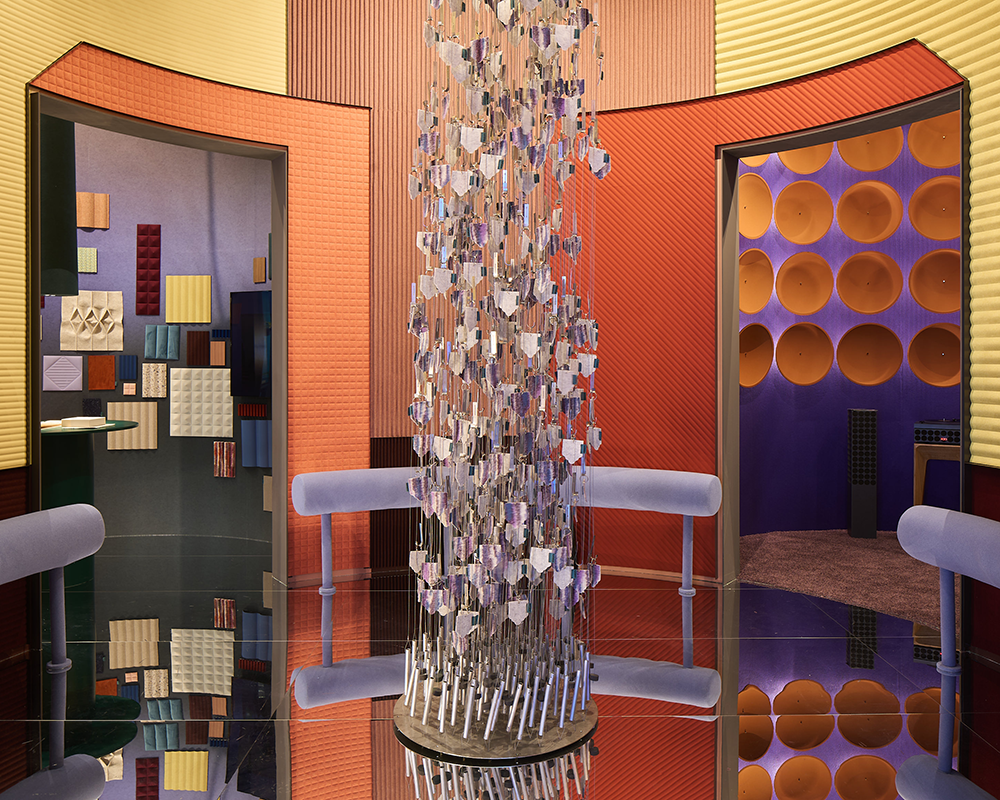
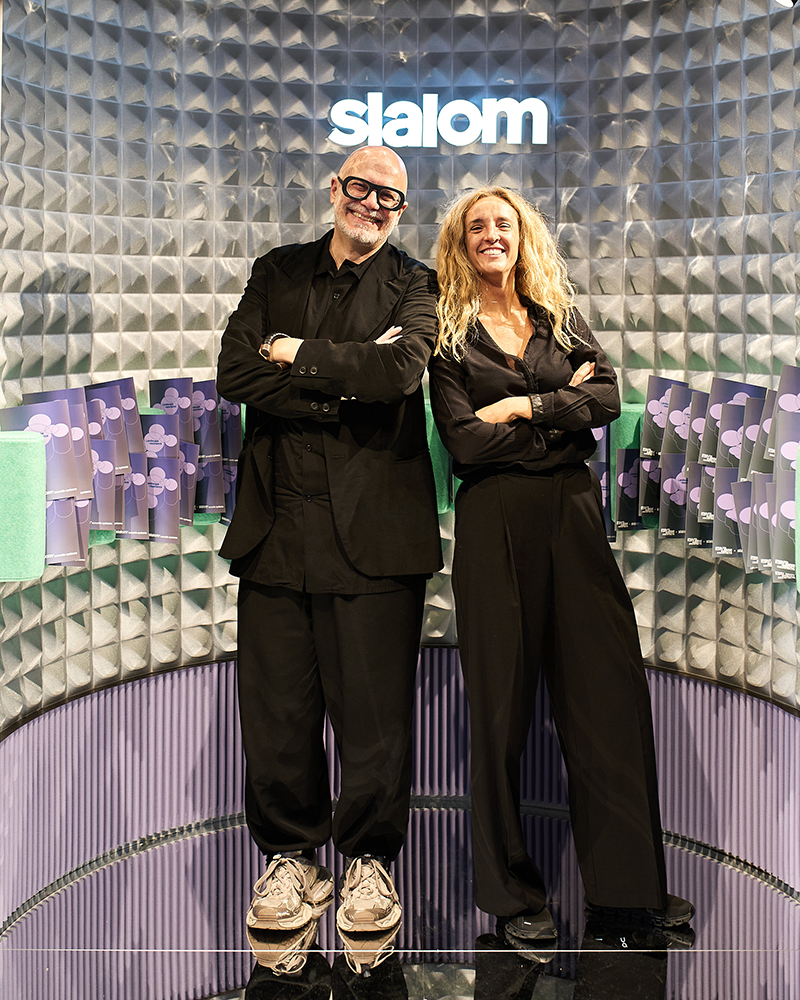
The answer, at ORGATEC, is Landscape of Resonance, the Slalom stand designed by IFG. It is a place to explore acoustic products rather than simply display them. “We love to play with them and see what else they can do, how we can misuse them in a productive way,” says Ippolito, who sees the same curiosity at work on both sides.
Ask how an architect can stay technically rigorous about acoustics and still be evocative, even a little poetic, and Ippolito dismisses the dilemma. “It’s better not to think about these contradictions, and that helps us avoid getting stuck. All our work is about people and the human experience: how do I use this space? Why do I want to go there, come back, or remember it?” In other words, the focus should be on spaces shaped by the people who use them, rather than dictated by the architect’s narrative or the client’s intentions. “Everyone remembers something different; everyone connects with a different piece of their own personal memory. That is how a space becomes yours.”
Acoustics, he says, has changed role over the course of his career. “When I started, it was typically treated as a technical matter. As we move towards more open spaces and more fluid environments, it becomes an integral part of design decisions.” The stand sets out to show that designers can work with Slalom and still achieve good acoustics without being tied to a single aesthetic. “You can be playful, sincere, restrained or expressive.” The aim of the different stand’s chambers, he says, is “to translate a technical feature into something emotional and tangible”.
The stand’s curved, cylindrical volumes serve the same purpose. From the outside, they give it a strong, distinctive identity, which is not always easy to achieve at a trade fair. “People walking around a fair are exhausted; you have ten seconds to catch their attention, make them curious and draw them in.” But the outside is only a promise. “You don’t want to reveal everything at first glance.” Someone is always peeking inside, catching a glimpse of another world. For Ippolito, discovery is also a way of making a space your own: “What I discover, I take ownership of. Everything I am simply told is someone else’s story.”
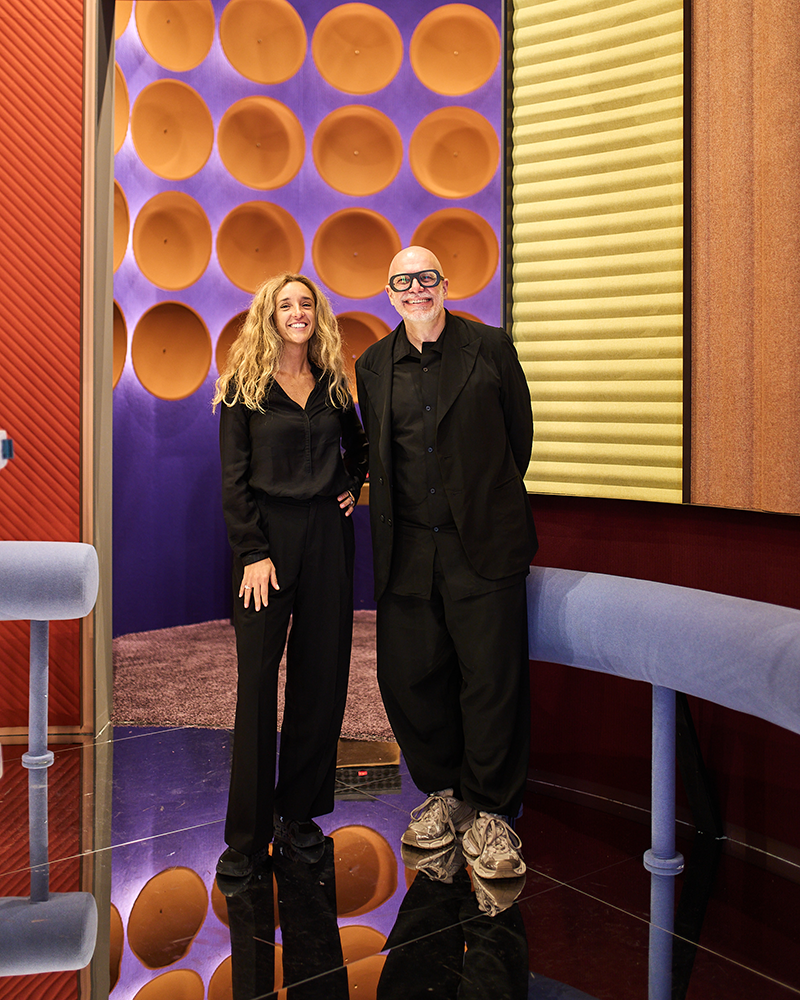
For de Pellegrin, this ability to make a space your own is closely tied to longevity. “People build memories. They may not remember a particular colour or finish, but they will remember how they felt inside a space.” Architects, she suggests, have the power to make people connect with a space and with one another.
For Ippolito, a space needs its own character, but that character should leave room for people to make it their own. “We’re looking for designs which are not exchangeable, for personality, character and identity, especially at a time where everything moves so fast. We only see value in things we want to remember. Personality creates friction,” he says. Yet, products should open up possibilities rather than restrict their use, allowing people to find their own ways of inhabiting a space. “A good space is an invitation,” he says, pointing to the stand’s different chambers of resonance, from the more intimate swing chamber to the more exposed Insta-room.
For de Pellegrin, materials are central to identity. “One of Slalom’s missions is for the material to become architecture.” The designer’s task, she explains, is to read the DNA of a client and express its character through their own eyes: each project has a different personality.
That’s why for both, resonance is ultimately a measure of a project’s value. “A space project is successful only if it resonates with its users,” says Ippolito. “You cannot put a number on it, it’s not about being economically successful.”
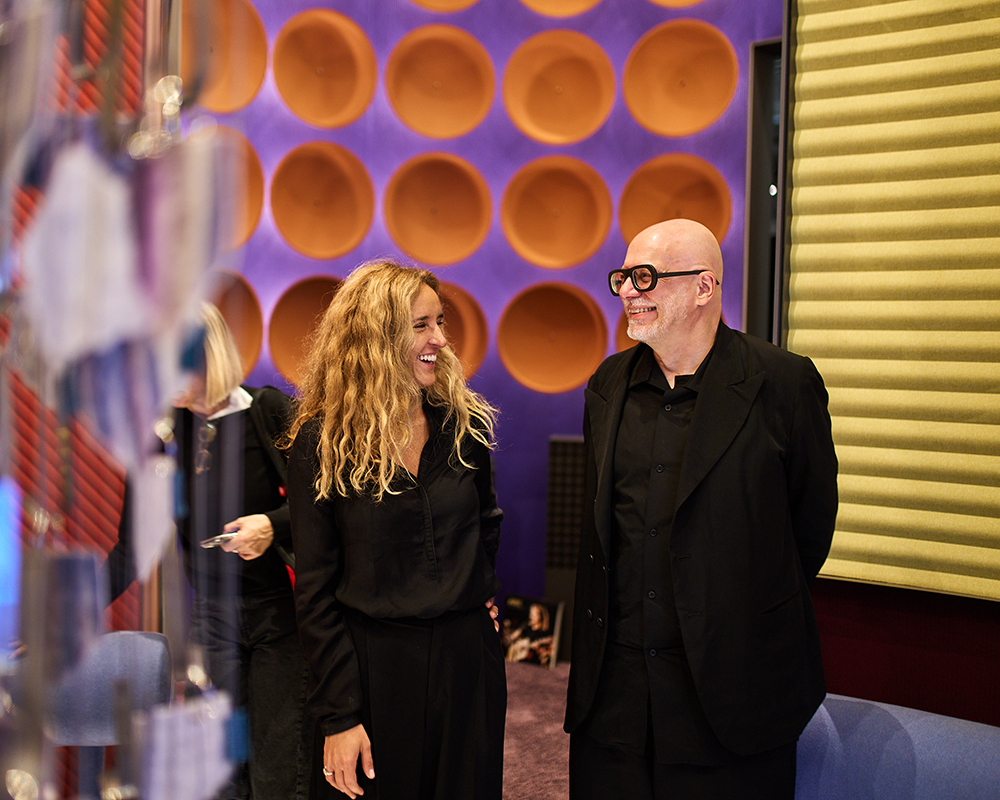
Work today, he argues, is first and foremost a cultural project: “People don’t enjoy a workspace for that particular furniture; they come to it for a sense of belonging, and purpose.”
De Pellegrin connects this idea to sustainability, which she calls “a social attitude”. Sustainability is not just about the ingredients of a material, but about a project’s sensitivity to change: its ability to evolve with a building, with a company and with the people who use it, accommodating different cultures, ages and energies.
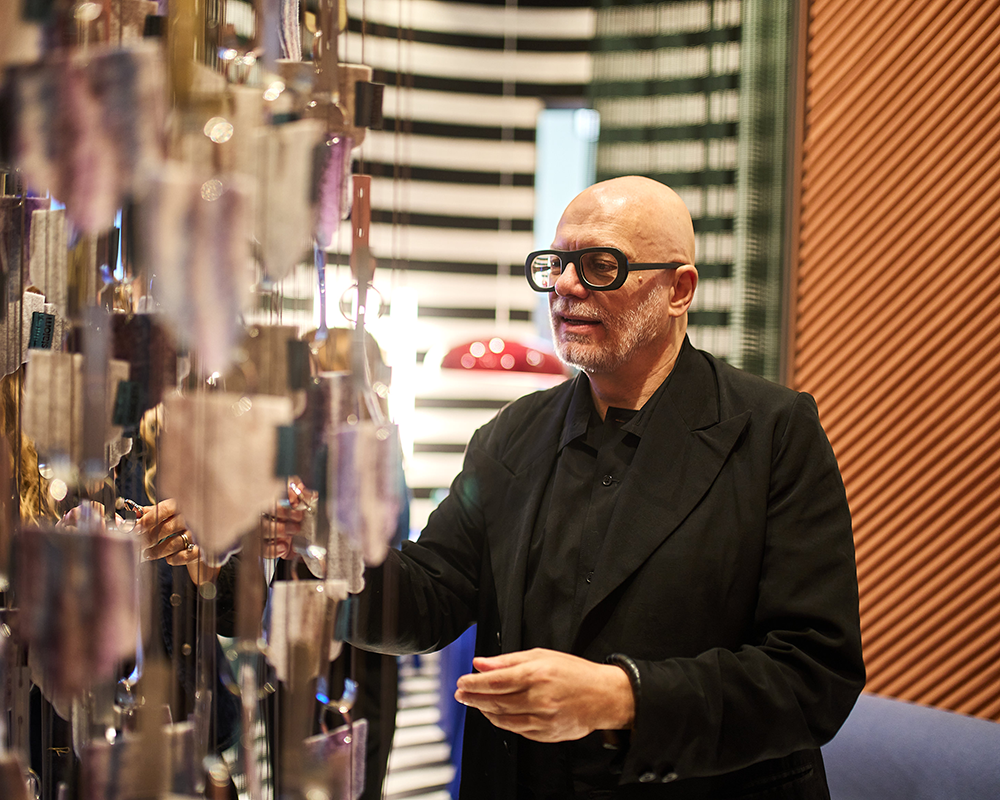
A project that fails to accompany its users over time, Ippolito argues, falls short of sustainability. He recalls IFG’s redesign, in 2012, of the canteen at Der Spiegel’s headquarters in Hamburg. The original canteen, designed by Verner Panton in the late 1960s, was a psychedelic orange-and-red environment. It was no longer contemporary in the conventional sense, but when the company moved to its new headquarters, everyone’s primary concern was about what would happen to it. The canteen had come to express the organisation’s culture and identity. Sustainability, Ippolito suggests, is not only about flexibility, but also about creating something with enough meaning to survive changing tastes.
The lasting relationship between architecture and its users depends on trust. Drawing on her background in Italian design culture, De Pellegrin recalls the longstanding relationships of trust between Milan’s bourgeoisie and its master architects, which gave rise to masterpieces in both residential and public spaces – works that remain remarkably relevant today.
In a context where interiors are expected to change ever more quickly, trust becomes even more important, while pointing out the educational role of architects through society. “Trust is pivotal in our job but not just between us and the client, but between us, the client and the user of the space. You have to trust the user. They know very well what they need,” says Ippolito. “Being able to trust the users, empowering them, is a magical moment.”
What more then, should corporate spaces offer today? “I am very interested in dialogue, but even more in listening: creating spaces where people can listen.”
Ippolito describes this as care. “Whatever the organisation, it needs to find that interesting space between friction, and a sense of care, where the user feels literally held by the organisation. For me, it is a moment of care, a moment of love.”


